








How to identify and register your pet covers the four layers of identification a pet in the Philippines can carry: a collar tag, a microchip, an IAGD record, and, for a dog, registration with the local government unit. Each layer does a different job, and a lost pet with all four is the one that comes home.
Do the tag and the IAGD record in the first week. Do the microchip at the first or second veterinary visit. Do the LGU registration as soon as the rabies vaccine is given.
Contents
Layer one: the collar tag
A tag with your mobile number is what a neighbour reads when the dog is found two streets away. Put the number, not the pet's name, on the tag; a stranger who knows the name can call the animal away. Use a flat collar or a harness for a dog, and a quick-release collar for a cat so it cannot hang itself on a branch. Check the fit monthly on a growing animal.
Layer two: the microchip
A microchip is a grain-sized implant a veterinarian places under the skin between the shoulders. It carries a number a scanner reads; the number is looked up in a database that holds your contact details. It is permanent and it cannot fall off, and it is the identification every country and airline asks for when an animal travels. It works only if the number is registered to you and the details stay current, so record the number on the pet's IAGD profile and update your phone number in the chip database when it changes.[1]
Microchipping is not required by national law for a pet that stays in the country. It is required for export, and it is the one identifier a shelter or veterinarian anywhere can read.
Layer three: the IAGD record
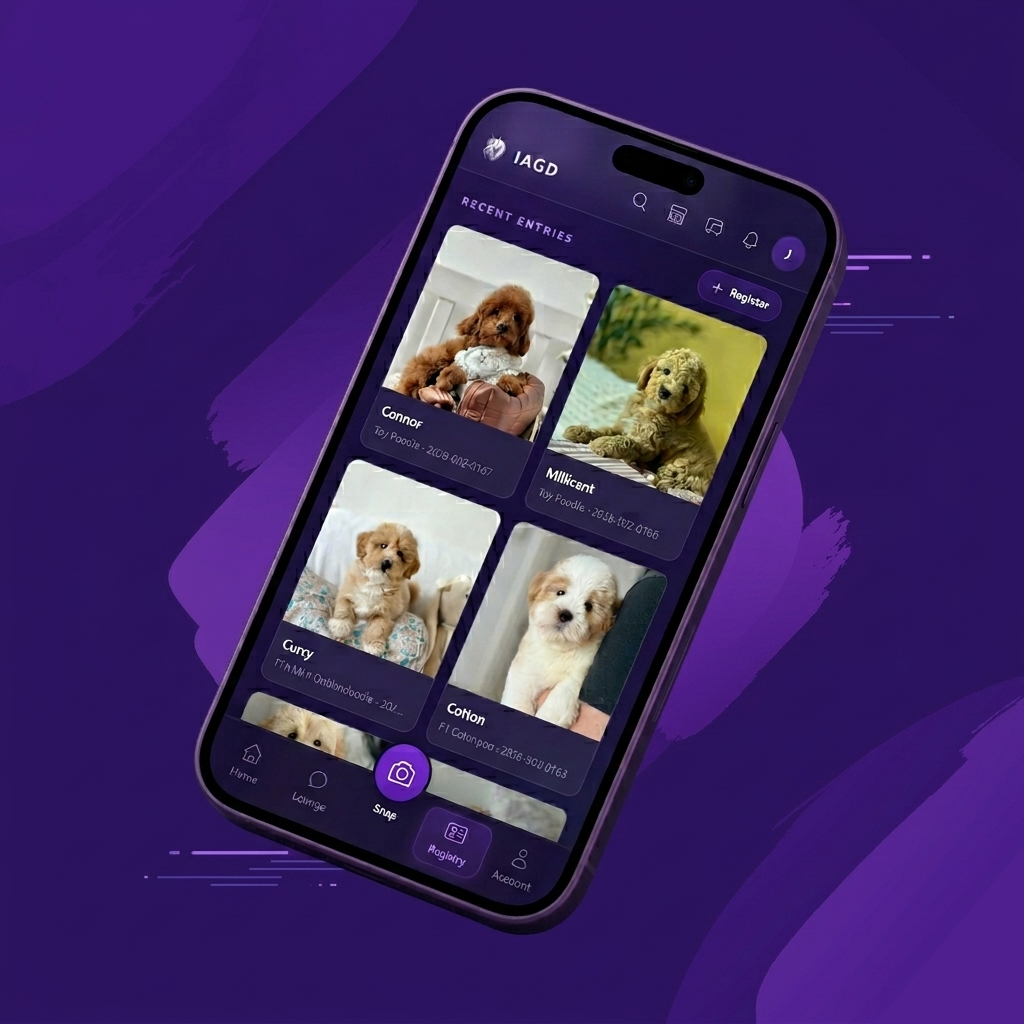
Registration with the International Animal Genetics Database gives the animal an IAGD number, a public profile, and a QR code that resolves to that profile. A finder who scans the tag or types the number reaches you through the profile without seeing your private details. The record also carries the animal's photos, its lineage where recorded, and the vaccination card you keep up to date, and it follows the animal when you move to another city or change veterinarians.
Register from the register page or the IAGD SuperApp. It is free. Attach photos of the LGU registration and rabies certificate to the profile so they are on your phone when an inspector or an airline asks. The IAGD is a private registry and does not replace any government document; see how IAGD records complement your government paperwork.
Layer four: LGU registration for dogs
Republic Act 9482, the Anti-Rabies Act, requires every dog owner to register the dog with the city or municipal veterinary office and to keep its rabies vaccination current. Registration is done at the veterinary office, usually at the same visit as the rabies shot, and many LGUs issue a tag or a certificate. The Help Desk covers the requirement and the steps in detail: do I need to register my dog with my LGU and how to register your dog, step by step.[2]
Cats, birds, and rabbits have no national registration requirement. Some LGUs run their own schemes; ask the city veterinarian.
What each layer does when the pet is lost
| Layer | Who reads it | What it needs to work |
|---|---|---|
| Collar tag | Anyone who finds the animal | A current phone number, and a collar that stayed on |
| Microchip | A veterinarian or shelter with a scanner | A registered number with current contact details |
| IAGD record | Anyone with a phone, through the QR or the number | An approved profile with a current contact route |
| LGU registration | The city pound and the veterinary office | Registration on file for the current year |
If the animal is lost, act in the first hours: walk the streets with food, tell the barangay and the city pound, post on the neighbourhood groups with a photo, and file a lost report in the IAGD SuperApp so that a sighting nearby can be matched to the record.
Keep the details current
- New phone number: update the tag, the chip database, and the IAGD profile the same week.
- New address or city: update the IAGD profile, and register the dog with the new LGU.
- New owner: transfer the IAGD record and the chip registration; do not leave them in your name.
- Yearly: renew the LGU registration with the rabies booster, and check the collar and tag for wear.
Common questions
Is the IAGD number the same as LGU registration?
No. The IAGD is a private registry. The LGU registration is the legal requirement for dogs. Have both.
Does a microchip track my pet's location?
No. It has no battery and no signal. It is a number a scanner reads from a few centimetres away.
Which is more important, the chip or the tag?
The tag brings the animal home fastest; the chip brings it home when the collar is gone. Fit both.
See also
References
- ^ American Veterinary Medical Association, Pet ownership.
- ^ Republic Act 9482, Anti-Rabies Act of 2007.


